Ph.D. in Network Learning Technology
National Central University, Taiwan
September 2011 – November 2018
AI in Education · CALL · Argumentative Writing · Knowledge Building
Assistant Professor, Department of English
National Taichung University of Education
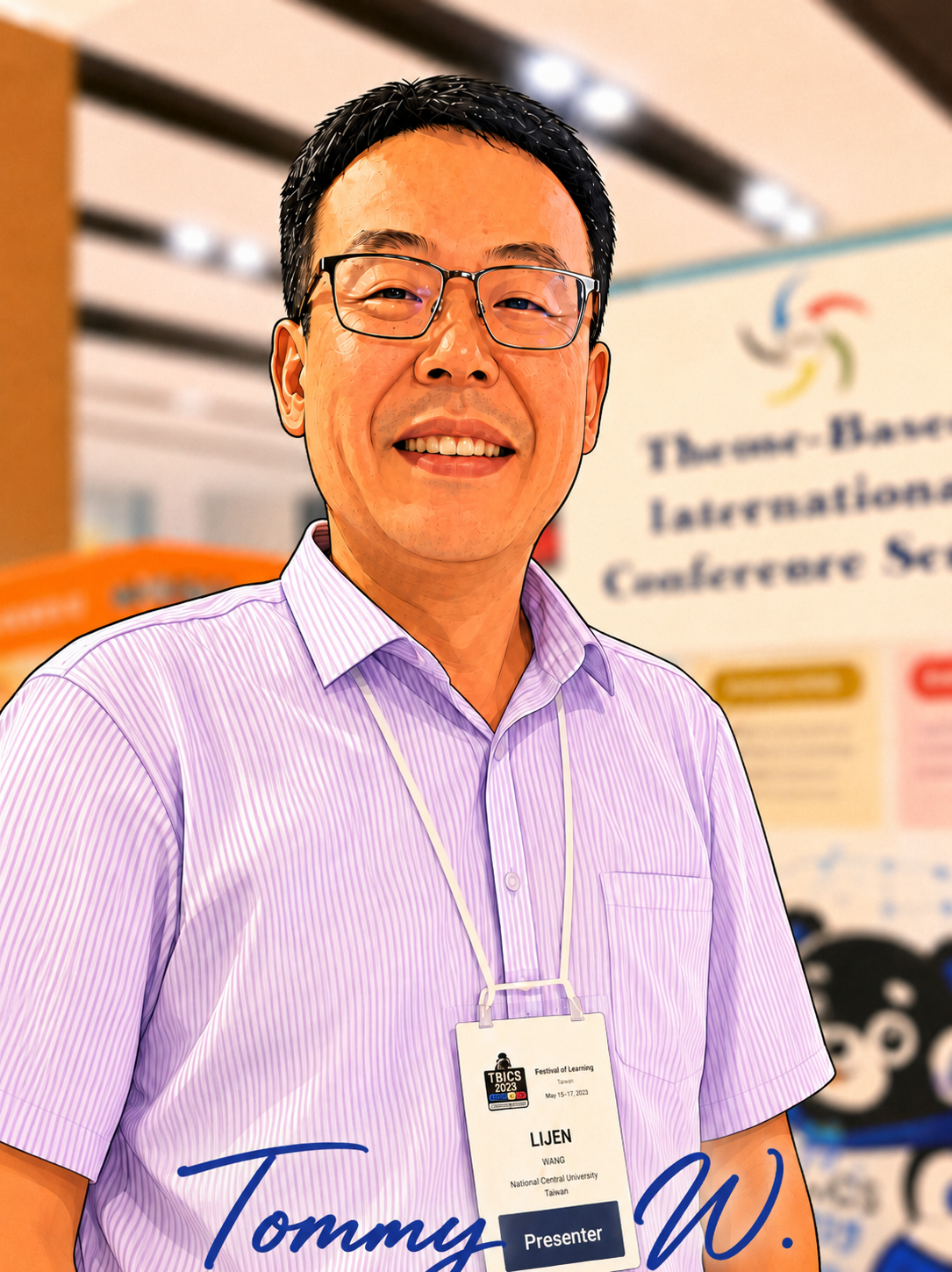
I study how AI, collaborative learning, and digital technologies can support language learning and knowledge construction while preserving learner thinking.
About
I am an educational technology and language-learning researcher whose academic background brings together English language teaching and learning technology. This interdisciplinary training has shaped my work at the intersection of artificial intelligence, computer-assisted language learning, argumentative writing, and collaborative knowledge building.
National Central University, Taiwan
September 2011 – November 2018
University of Stirling, United Kingdom
September 2006 – November 2007
My teaching career spans secondary and higher education, giving me more than twenty years of experience with learners at different stages of English development. Before moving fully into higher education, I taught English in junior and senior high schools, where I also worked in curriculum leadership and with gifted English learners. These experiences continue to shape the questions I ask as a researcher: how can technology increase opportunities for meaningful language use, support dialogue and revision, and help learners develop stronger ideas without doing the thinking for them?
My current work examines question-only AI Socratic dialogue, AI-supported writing environments, human–AI co-creative learning, and learning analytics. Across these projects, I am particularly interested in designing technologies that support productive language use, make learning processes visible, and preserve learner agency and authorship.
Research
Four connected lines of inquiry guide my current work.
Socratic AI dialogue, AI-supported writing, generative AI, and responsible human–AI interaction.
Technology-supported argumentation, evidence use, rebuttal development, and writing engagement.
Collaborative knowledge construction, online argumentation, and technology-supported learning environments.
Critical AI literacy, co-creative learning, interaction patterns, and performance-based learning analytics.
Publications
A dedicated publications page now lists journal articles and conference presentations in full.
Wang, L.-J. (2026). Question-only AI Socratic dialogue as dialogic feedback in L2 argumentative writing: A quasi-experimental study. Journal of Second Language Writing, 73, Article 101331.
Wang, L.-J. (2026). Adaptive reorganization in knowledge building research (2014-2025): Continuity and change across the pandemic and post-AI era. International Journal of Computer-Supported Collaborative Learning. Advance online publication.
Wang, L.-J., Wu, Y.-T., & Cheng, T.-Y. (2026). Measuring engagement in technology-supported collaborative argumentative writing: Development and validation of the T-CLEA scale. Assessing Writing, 69, Article 101089.
Projects
Projects designed around a common question: how can AI extend learning without taking thinking away from learners?
Dialogic AI
AI asks questions rather than providing answers, supporting evidence use, rebuttal quality, and learner ownership in argumentative writing.
Writing Environment
A multi-stage writing environment integrating collaborative argumentation, knowledge building, AI-guided planning, individual writing, and revision.
Learning Analytics
Learning analytics of elementary students' human–AI co-creative interaction, critical revision, and performance-based AI literacy.
Scientific Inquiry
Generative AI and natural language processing scaffolds that help learners refine, compare, and converge ideas during collaborative scientific inquiry.
Teaching
My teaching brings together language education, digital pedagogy, and research training for students and graduate learners.
Research design, measurement, statistical analysis, and academic reporting for graduate students.
Developing claims, evidence, rebuttals, revision, and responsible use of AI support.
Digital tools, learning environments, and technology-mediated language pedagogy.
Human–AI interaction, learning design, AI literacy, and preserving learner agency.
Contact
For research collaboration, academic exchange, or invited talks, please get in touch by email.
Taichung, Taiwan